Introduction
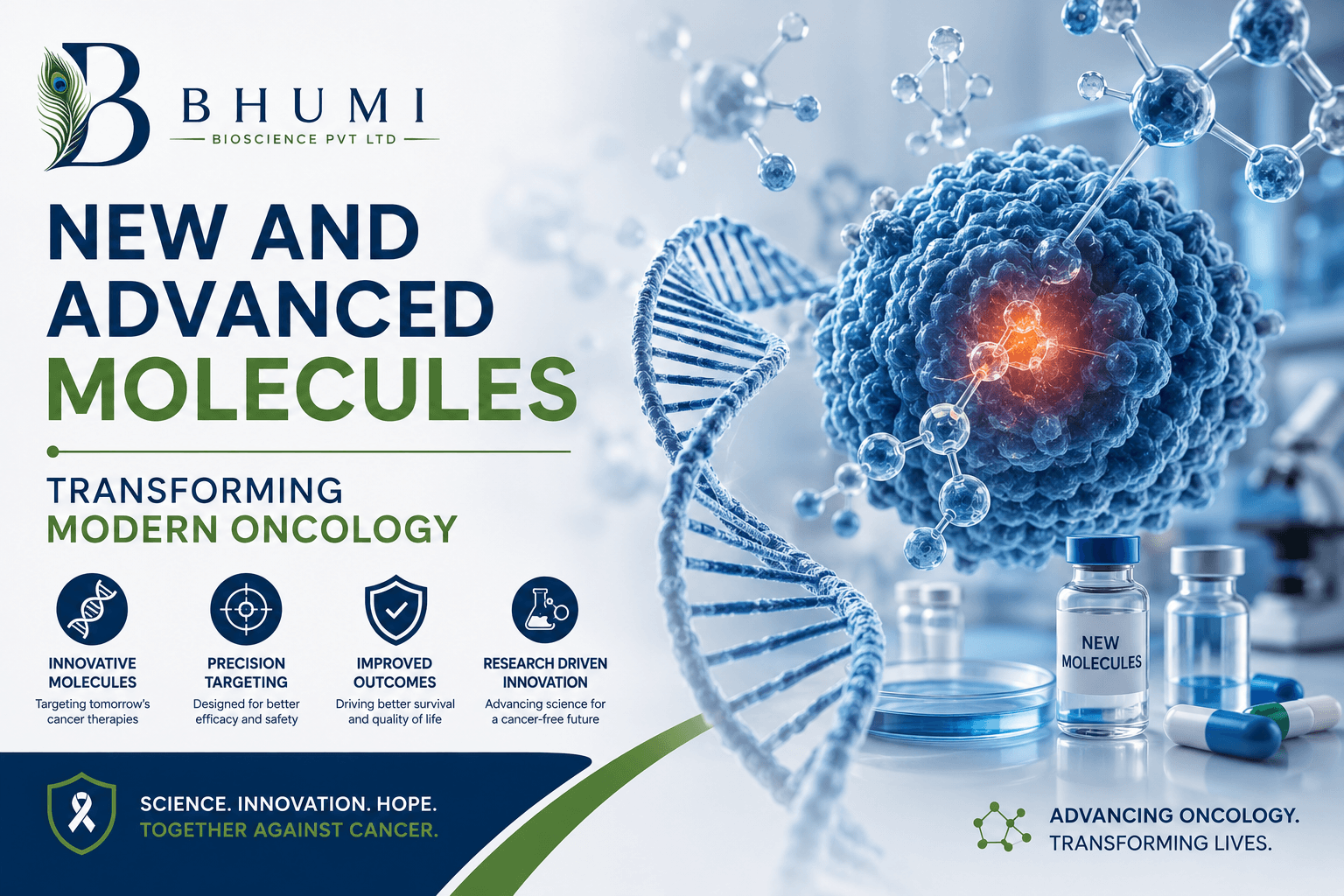
Oncology is entering a revolutionary era driven by precision medicine, targeted therapies, immunotherapy, and next-generation biologics. Traditional chemotherapy, while effective in many cancer types, is increasingly being complemented or replaced by advanced oncology molecules designed to improve efficacy, reduce toxicity, and enhance patient survival outcomes.
The global oncology market is rapidly evolving toward personalized and biomarker-driven treatment approaches, creating strong demand for innovative pharmaceutical manufacturing and development capabilities. Precision oncology, antibody-drug conjugates (ADCs), immunotherapy platforms, and molecular targeted therapies are reshaping cancer care worldwide.
Bhumi Bioscience Private Limited is committed to supporting the future of pharmaceutical innovation through quality-focused manufacturing systems, advanced formulation approaches, and global healthcare standards.
Evolution of Oncology Treatment
Cancer treatment has progressed through several major generations:
First Generation: Conventional Chemotherapy
Traditional cytotoxic drugs targeted rapidly dividing cells but often caused significant side effects due to non-selective action.
Second Generation: Targeted Therapy
Targeted molecules revolutionized oncology by attacking specific genetic mutations or signaling pathways involved in tumor growth.
Examples include:
- EGFR inhibitors
- HER2 inhibitors
- ALK inhibitors
- MET inhibitors
Advanced MET-targeted therapies and mutation-specific inhibitors are now becoming increasingly important in difficult-to-treat cancers such as non-small cell lung cancer (NSCLC).
Rise of Precision Oncology
Precision oncology focuses on identifying specific molecular alterations within tumors and selecting therapies tailored to those mutations.
Modern oncology now incorporates:
- Genomic profiling
- Biomarker testing
- Companion diagnostics
- Personalized treatment protocols
This approach significantly improves:
- Treatment response
- Disease control
- Patient survival
- Quality of life
India is also witnessing rapid adoption of precision oncology therapies and targeted cancer medicines.
Advanced Oncology Molecules Reshaping Cancer Therapy
Immune Checkpoint Inhibitors
Checkpoint inhibitors have transformed cancer immunotherapy by enabling the immune system to recognize and attack cancer cells more effectively.
Key targets include:
- PD-1
- PD-L1
- CTLA-4
These therapies are now widely used in:
- Lung cancer
- Melanoma
- Renal cancer
- Gastric cancer
- Head & neck cancers
The next generation of immunotherapies aims to overcome resistance mechanisms and improve durable responses in solid tumors.
Recent advances include newer immunotherapy molecules such as retifanlimab, which has demonstrated meaningful survival benefits in advanced cancers.
Antibody-Drug Conjugates (ADCs): The Future of Targeted Oncology
ADCs are among the fastest-growing areas in oncology innovation.
These advanced molecules combine:
- Monoclonal antibodies
- Highly potent cytotoxic payloads
- Specialized linker technologies
This enables targeted delivery of chemotherapy directly to cancer cells while minimizing systemic toxicity.
Emerging ADC technologies are demonstrating remarkable results in:
- Breast cancer
- Lung cancer
- Ovarian cancer
- Gastrointestinal cancers
New-generation ADCs such as sacituzumab tirumotecan are showing encouraging survival outcomes in resistant cancers.
CAR-T Cell Therapy and Cellular Immunotherapy
Cellular immunotherapy represents a major breakthrough in oncology.
CAR-T therapy involves:
- Collecting patient immune cells
- Genetically engineering them
- Reinfusing them to attack cancer cells
Originally successful in blood cancers, CAR-T technologies are now expanding into solid tumors with promising clinical outcomes.
Emerging “off-the-shelf” cellular therapies may further improve accessibility and reduce manufacturing complexity.
Bispecific Antibodies and Multi-Target Oncology Molecules
Advanced oncology pipelines increasingly focus on bispecific antibodies capable of targeting two different pathways simultaneously.
Potential advantages include:
- Enhanced tumor targeting
- Reduced resistance
- Improved immune activation
- Better therapeutic outcomes
These technologies are becoming important in modern immuno-oncology research and clinical development.
Small Molecule Precision Therapies
Highly selective small molecule inhibitors continue to play a critical role in oncology treatment.
Recent innovation areas include:
- HER2 selective inhibitors
- KRAS inhibitors
- RET inhibitors
- MET inhibitors
- BRAF inhibitors
New precision therapies targeting HER2-mutated cancers and resistant tumor pathways are expanding rapidly.
Role of AI and Biotechnology in Oncology Drug Discovery
Artificial intelligence is accelerating oncology research by:
- Predicting molecular interactions
- Identifying drug targets
- Optimizing formulations
- Enhancing clinical trial design
AI-assisted biotechnology platforms are significantly reducing oncology drug discovery timelines and improving development success rates.
Pharmaceutical Manufacturing Challenges in Advanced Oncology Molecules
Manufacturing oncology products requires highly specialized infrastructure and strict containment systems.
Key manufacturing considerations include:
High Potency API Handling
Many oncology molecules require advanced containment due to extremely potent active ingredients.
Sterility and Contamination Control
Biologics and injectable oncology products demand highly controlled aseptic manufacturing environments.
Complex Formulation Technologies
Advanced oncology formulations often involve:
- Liposomal systems
- Nanoparticles
- Bioconjugation technologies
- Controlled release systems
Regulatory Compliance
Oncology manufacturing must align with:
- WHO-GMP
- EU-GMP
- USFDA standards
- ICH guidelines
Global Oncology Market Growth
The worldwide oncology sector is expected to experience substantial long-term growth due to:
- Rising cancer incidence
- Aging populations
- Improved diagnostics
- Increased healthcare access
- Innovation in biologics and immunotherapy
The oncology market is increasingly driven by:
- Targeted therapies
- Immuno-oncology
- ADCs
- Cell therapies
- Personalized medicine platforms
Future of Oncology Treatment
The future of cancer therapy is moving toward:
- Precision medicine
- Multi-target immunotherapy
- Gene editing technologies
- Personalized vaccines
- AI-integrated oncology
- Combination immunotherapies
Researchers continue to explore next-generation platforms capable of delivering safer, smarter, and more effective cancer treatment solutions.
Bhumi Bioscience Private Limited: Supporting the Future of Pharmaceutical Innovation
Bhumi Bioscience Private Limited is focused on contributing to the pharmaceutical industry through:
- Advanced manufacturing approaches
- Quality-driven systems
- Regulatory-focused operations
- Global partnership development
- Innovation-oriented pharmaceutical solutions
The company aims to support the evolving needs of modern healthcare markets through reliable pharmaceutical manufacturing and development excellence.
Conclusion
The oncology industry is undergoing one of the most transformative periods in pharmaceutical history. Advanced molecules such as immunotherapies, ADCs, CAR-T therapies, bispecific antibodies, and precision-targeted drugs are redefining cancer treatment standards worldwide.
As innovation accelerates, pharmaceutical companies with strong quality systems, regulatory expertise, and advanced manufacturing capabilities will play a critical role in shaping the future of global oncology care.
With a commitment to pharmaceutical excellence and innovation-driven growth, Bhumi Bioscience Private Limited continues to support the advancement of modern healthcare and the future of pharmaceutical manufacturing.